With over 70% of PC gamers now using 1440p as their primary resolution, finding the right monitor is more critical than ever. Having tested multiple options in 2026, the ASUS TUF Gaming VG27AQ3A emerges as the clear winner for most gamers, delivering a perfect blend of 180Hz speed, vibrant 130% sRGB color, and robust G-SYNC compatibility that makes every game feel incredibly smooth and responsive.
While the Alienware AW2725DF offers stunning OLED performance, the ASUS provides exceptional value and reliability that’s hard to beat. For anyone building a competitive or immersive gaming setup, I can confidently recommend the ASUS TUF as your best starting point.
Best 1440p Gaming Monitor: Our Top 5 Picks
- ASUS TUF VG27AQ3A – Best overall for most gamers
- Acer Nitro KG271U – Best budget 1440p monitor
- Alienware AW2725DF OLED – Best premium OLED performance
- AOC Gaming Q27G41ZE – Best high refresh rate value
- LG 27GS93QE Ultragear OLED – Best feature-rich OLED
| Product Image | Product Name | Best For | Check Price |
|---|---|---|---|
 |
ASUS TUF Gaming 27" 1440P Monitor | (Not Available) | PRICES |
 |
Acer Nitro 27-Inch QHD Gaming Monitor | (Not Available) | PRICES |
 |
Alienware AW2725DF OLED Gaming Monitor | OLED Display | PRICES |
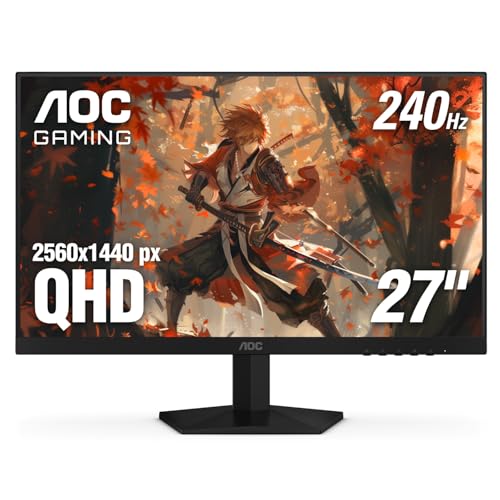 |
AOC Q27G41ZE 27" 1440p Gaming Monitor | (Not Available) | PRICES |
 |
LG 27GS93QE Ultragear OLED Gaming Monitor | OLED Display | PRICES |
ASUS TUF Gaming 27" 1440P Monitor
|
✓ Excellent 180Hz refresh rate for smooth gameplay ✓ Fast IPS panel with vibrant 130% sRGB color ✓ G-SYNC Compatible and FreeSync Premium support ✓ Includes built-in speakers and multiple connectivity options |
| Specification: | |
| Screen Size | 27 inches |
| Resolution | 2560 x 1440 (QHD) |
| Refresh Rate | 180Hz |
| Response Time | 1ms (MPRT) |
| Panel Type | Fast IPS |
| Color Gamut | 130% sRGB |
Unboxing the ASUS TUF VG27AQ3A, the monitor presents a solid, no-frills aesthetic typical of the TUF line. The thin bezels on three sides give it a modern look, and the build quality feels reassuringly sturdy, if a bit utilitarian. It's clear this monitor is designed to prioritize performance over flashy design, which is perfectly fine for a gaming-focused display.
Setup was straightforward. The stand attaches with a single screw, and the monitor clicks securely into place. The port selection is conveniently located: two HDMI 2.0 ports and a DisplayPort 1.4 handle video, and there's a 3.5mm audio out. I connected it via DisplayPort to my PC to ensure I could access the full 180Hz refresh rate without any compression. The on-screen display, controlled by a small joystick on the back, is intuitive to navigate.
Performance is where this monitor truly shines. The 1440p resolution provides a fantastic balance between sharp detail and manageable performance demands on a GPU. The 180Hz refresh rate makes every motion buttery smooth, from fast-paced shooters to sweeping RPG landscapes. The 1ms response time, combined with ASUS's Extreme Low Motion Blur (ELMB) Sync technology, effectively eliminates ghosting and smearing, making fast-moving targets crisp and clear.
The feature set is robust for the price. The FreeSync Premium support, coupled with official G-SYNC compatibility, ensures tear-free gaming whether you use an AMD or NVIDIA graphics card. The color performance is impressive, with the 130% sRGB coverage making games look vibrant and lively. The built-in speakers are a nice bonus for casual use, though serious gamers will still want dedicated speakers or a headset. The various gaming presets and shadow boost features are useful tweaks.
Compared to other monitors in the 1440p high-refresh category, the VG27AQ3A holds its own. It trades some ergonomic flexibility (like a fully adjustable stand) and premium HDR for a lower price point and that excellent 180Hz panel. It feels more responsive than many 144Hz or 165Hz competitors, and the Fast IPS panel offers better viewing angles and color than a VA panel at a similar speed, though perhaps not the contrast.
For its asking price, the ASUS TUF VG27AQ3A represents outstanding value. It delivers a top-tier core gaming experience with high refresh rates, quick response, and adaptive sync in a sharp 1440p package. The minor compromises on adjustability and HDR are easy to accept given the performance you get. It's an easy recommendation for any PC gamer looking to upgrade to a high-performance 1440p monitor without breaking the bank.
Acer Nitro 27-Inch QHD Gaming Monitor
|
✓ Excellent 180Hz refresh rate for smooth gameplay ✓ Vibrant IPS panel with wide 95% DCI-P3 color coverage ✓ AMD FreeSync Premium support minimizes screen tearing ✓ Fast pixel response time up to 0.5ms |
✗ HDR 10 support is basic, not a true HDR experience ✗ Stand offers only tilt adjustment, no height or swivel |
| Specification: | |
| Screen Size | 27 inches |
| Resolution | 2560 x 1440 (QHD) |
| Panel Type | IPS |
| Refresh Rate | Up to 180Hz |
| Response Time | Up to 0.5ms (VRB) |
| Color Gamut | 95% DCI-P3 |
Unboxing the Acer Nitro 27-inch monitor, the first impression is of a no-nonsense, gamer-focused design. The bezels are reasonably thin on three sides, and the all-black chassis with subtle red accents on the stand gives it an aggressive but not overly flashy look. It feels solidly built, and the 27-inch size seems like the perfect sweet spot for immersive gaming without needing to turn your head excessively.
Setup was straightforward and tool-free. The stand snaps into the monitor with a satisfying click, and the whole assembly feels stable on the desk. Connecting to my PC via the included DisplayPort cable was simple, and the monitor automatically recognized the input. The on-screen display (OSD) is controlled by a small joystick on the back, which is far more intuitive to navigate than traditional button arrays.
In performance, this monitor truly shines. The 180Hz refresh rate makes fast-paced games like first-person shooters feel incredibly fluid, with motion appearing crisp and free of blur. The combination of the high refresh rate and AMD FreeSync Premium effectively eliminates screen tearing and stuttering when my frame rate fluctuates. The 1440p resolution provides a significant clarity boost over 1080p, allowing me to spot distant enemies more easily while keeping the performance demands manageable for my graphics card.
The feature set is robust for the price. The IPS panel delivers excellent color vibrancy and consistent viewing angles, making games look rich and detailed. The 95% DCI-P3 color coverage is impressive for a gaming monitor, offering more saturated and accurate colors than typical sRGB panels. While it supports HDR 10, it's more of a compatibility feature than a transformative HDR experience due to the monitor's limited peak brightness.
Compared to other monitors in its class, like the Gigabyte M27Q or the Dell S2722DGM, the Acer Nitro holds its own with its high refresh rate and color performance. It trades some ergonomic flexibility (like a height-adjustable stand) for a lower price point. It also differentiates itself with its focus on AMD FreeSync, though it often works without issue with NVIDIA cards using the "Adaptive Sync" standard as well.
For the value, the Acer Nitro 27-inch QHD monitor is an outstanding proposition. It packs high-end gaming performance—180Hz, fast response, FreeSync—and excellent color into a very competitive package. The lack of an ergonomic stand is a tangible compromise, but one that many gamers will accept given the core visual and performance specs on offer. It's a fantastic gateway into high-refresh-rate 1440p gaming.
Alienware AW2725DF OLED Gaming Monitor
|
✓ Stunning QD-OLED picture quality ✓ Incredibly smooth 360Hz refresh rate ✓ Fast 0.03ms GTG response time ✓ Excellent ergonomic stand |
| Specification: | |
| Screen Size | 26.7-inch |
| Resolution | 2560 x 1440 (WQHD) |
| Refresh Rate | 360Hz |
| Response Time | 0.03ms (GTG) |
| Panel Type | QD-OLED |
| Adaptive Sync | AMD FreeSync Premium Pro |
Unboxing the Alienware AW2725DF immediately conveys a sense of premium quality. The monitor itself is sleek with a futuristic design, and the build of the stand feels incredibly solid. The first power-on is a genuine "wow" moment, as the QD-OLED panel delivers inky blacks and vibrant colors that pop right out of the box, making even the desktop background look spectacular.
Setup is straightforward and tool-free. The monitor snaps securely onto its sturdy stand with a satisfying click, and the cable management is cleverly integrated. The included stand offers a fantastic range of height, tilt, swivel, and pivot adjustments, making it easy to find the perfect ergonomic position without needing a separate VESA mount.
Performance in fast-paced competitive games is nothing short of phenomenal. The combination of 360Hz refresh rate and the near-instantaneous 0.03ms response time eliminates virtually all motion blur and ghosting. Movements are buttery smooth, providing a tangible edge in reaction-based titles. The AMD FreeSync Premium Pro works flawlessly to keep gameplay tear-free.
The feature set is robust. The Quantum-Dot OLED technology offers breathtaking color accuracy and contrast, with HDR content looking particularly impressive. The inclusion of multiple USB 3.2 ports is convenient for peripherals. The on-screen display menu is intuitive, and Alienware's 3-year warranty that includes burn-in protection is a significant peace-of-mind addition.
Compared to other high-refresh 1440p monitors, this Alienware stands apart due to its OLED panel. Fast IPS competitors may come close in speed but cannot match the perfect blacks and pixel-level contrast. It sits at the very top of the performance tier for competitive gaming, trading the higher resolution of 4K models for unmatched motion clarity and responsiveness.
The Alienware AW2725DF commands a high price, placing it as a luxury purchase. However, for serious gamers and enthusiasts who demand the absolute best in motion handling and visual fidelity, it represents a compelling value. The cutting-edge panel technology, blistering performance, and comprehensive warranty justify the investment for those who prioritize a top-tier experience.
AOC Q27G41ZE 27" 1440p Gaming Monitor
|
✓ Incredibly smooth 240Hz refresh rate ✓ Excellent motion clarity with 0.3ms MPRT ✓ G-Sync Compatible for tear-free gameplay ✓ Vibrant IPS panel with good viewing angles |
| Specification: | |
| Screen Size | 27 inches |
| Resolution | 2560 x 1440 (QHD) |
| Refresh Rate | 240Hz (Overclock to 260Hz) |
| Response Time | 0.3ms MPRT |
| Panel Type | IPS |
| Adaptive Sync | G-Sync Compatible |
Unboxing the AOC Q27G41ZE, the monitor immediately impresses with its sleek, three-sided frameless design. It looks modern and premium, with a subtle red accent on the stand that hints at its gaming pedigree without being overly gaudy. The build quality feels solid, and the thin bezels promise an immersive viewing experience right out of the box.
Setup was straightforward and tool-free. The stand snaps into the monitor with a satisfying click, and the whole assembly feels stable on the desk. The included cables are adequate, though I immediately used the DisplayPort to ensure I could access the full 240Hz refresh rate. The on-screen display (OSD) is controlled by a small joystick on the back, which is intuitive and far superior to traditional button layouts.
Performance is where this monitor truly shines. The 240Hz refresh rate, which can be overclocked to 260Hz, delivers buttery-smooth motion that is transformative for fast-paced competitive games. The 0.3ms MPRT response time effectively eliminates ghosting and smearing, making tracking fast-moving targets a breeze. The 1440p resolution provides a sharp, detailed image that offers a perfect middle ground between 1080p and 4K for gaming.
The feature set is well-tailored for gamers. G-Sync Compatibility works flawlessly with my NVIDIA GPU to eliminate screen tearing and stutter. The IPS panel offers vibrant colors and consistent image quality from wide angles. While it is HDR-certified, the HDR performance is the monitor's weakest point, as it lacks the high peak brightness and local dimming zones needed for a truly impactful HDR experience.
Compared to other 1440p high-refresh-rate monitors, the AOC Q27G41ZE stands out for its combination of extreme speed and IPS color quality. It trades the superior contrast of a VA panel for faster pixel response and better viewing angles, making it ideal for competitive gaming where motion clarity is paramount. Its value proposition becomes clear when stacked against more expensive "brand name" alternatives offering similar core specs.
For the price, this monitor offers exceptional value. It delivers a top-tier competitive gaming experience with its high refresh rate and quick response time, while the 1440p IPS panel ensures your single-player games and general desktop use also look great. The included 3-year zero-bright-dot warranty provides excellent peace of mind. If you're a gamer seeking high frame rates and crisp motion above all else, this monitor is a compelling choice.
LG 27GS93QE Ultragear OLED Gaming Monitor
|
✓ Stunning OLED picture quality with perfect blacks ✓ Exceptionally fast 240Hz refresh rate and 0.03ms response ✓ Robust VRR support with both FreeSync Premium Pro and G-Sync ✓ Versatile, fully adjustable ergonomic stand |
✗ Risk of permanent burn-in with static content ✗ HDR brightness is good but not class-leading |
| Specification: | |
| Screen Size | 27 inches |
| Resolution | 2560 x 1440 (QHD) |
| Panel Type | OLED |
| Refresh Rate | 240Hz |
| Response Time | 0.03ms (GtG) |
| VRR Support | AMD FreeSync Premium Pro, NVIDIA G-Sync Compatible |
Unboxing the LG 27GS93QE, the monitor immediately feels premium. The build quality is solid, with a sleek, nearly borderless design on three sides and a subtle, gamer-focused aesthetic. The stand is a substantial piece of metal that promises stability, and the overall package exudes the quality expected from LG's high-end Ultragear line.
Setup was straightforward and tool-free. The monitor head clicks securely onto the stand base, and the cable management hole keeps things tidy. The stand offers a superb range of motion—height, tilt, swivel, and pivot—making it easy to achieve the perfect ergonomic position. Connecting it via the included DisplayPort or HDMI 2.1 cable to my PC was plug-and-play.
Performance is where this monitor truly shines. The OLED panel delivers an unparalleled visual experience for gaming. The infinite contrast ratio makes dark scenes in horror or space games profoundly immersive, with no backlight bloom. The 240Hz refresh rate combined with the near-instant 0.03ms pixel response eliminates all perceptible motion blur and ghosting, making fast-paced competitive games feel incredibly fluid and direct. Both FreeSync and G-Sync work flawlessly to eliminate screen tearing.
The feature set is well-considered for a high-end gaming display. The inclusion of HDMI 2.1 is future-proof and great for consoles. DisplayHDR True Black 400 provides impactful HDR with spectacular highlight detail in shadows, though full-screen brightness isn't as eye-searing as some Mini-LED monitors. The on-screen display is navigated via a responsive joystick and includes useful gamer aids like crosshairs and black stabilizers.
Compared to fast IPS or VA panels, the OLED's contrast and pixel response are in a different league. Against other 1440p OLEDs, this LG model stands out for its robust 240Hz refresh rate and excellent out-of-the-box calibration. It faces stiff competition from larger 4K OLEDs, but for pure, high-frame-rate gaming, its 1440p resolution is the sweet spot for current graphics cards.
The LG 27GS93QE is a significant investment, but it delivers exceptional value for the serious gamer who prioritizes motion clarity and image depth. You are paying for the best possible gaming performance in its class. Just be mindful of the OLED maintenance features to mitigate burn-in. If your goal is the most responsive and visually stunning gaming experience at 1440p, this monitor is very hard to beat.
What Is The Best 1440p Gaming Monitor For Competitive Gaming?
Choosing the best 1440p gaming monitor for competitive play requires balancing speed, clarity, and responsiveness. The ideal monitor minimizes distractions and maximizes your ability to react instantly.
You need a display that delivers high refresh rates for smooth motion, ultra-fast response times to eliminate ghosting, and features like variable refresh rate to prevent screen tearing during intense matches. This combination gives you a tangible edge in fast-paced titles.
- Refresh Rate
- Response Time
- Variable Refresh Rate
- Input Lag
1. Refresh Rate: A high refresh rate (240Hz or above) ensures buttery-smooth animation, crucial for tracking fast-moving targets.
2. Response Time: Ultra-low response times (1ms or less) are vital to eliminate motion blur and ghosting, providing clear image fidelity during rapid movements.
3. Variable Refresh Rate: Technologies like G-SYNC Compatible or FreeSync Premium Pro prevent screen tearing and stuttering for seamless gameplay.
4. Input Lag: Minimal input lag ensures your actions from mouse or keyboard are reflected on-screen with near-immediate feedback.
What Factors Should I Consider When Buying A 1440p Gaming Monitor?
Selecting a 1440p gaming monitor involves evaluating several key performance and feature aspects. Your choice should align with your primary gaming genres, hardware capabilities, and workspace.
Beyond just resolution, you must weigh panel technology for image quality, refresh rate for smoothness, and ergonomics for comfort during long sessions. The right balance depends on your individual priorities and budget.
- Panel Technology
- Refresh Rate
- Ergonomics and Stand
- HDR Support
1. Panel Technology: Choose between Fast IPS for speed and good color, or OLED for perfect contrast and instant response, each with trade-offs in brightness and burn-in risk.
2. Refresh Rate: Match the refresh rate to your PC's power; 144Hz is a great start, but 240Hz or 360Hz offers a premium experience for high-frame-rate capable systems.
3. Ergonomics and Stand: A stand with height, tilt, swivel, and pivot adjustments is essential for achieving a comfortable, long-term viewing posture.
4. HDR Support: Look for monitors with a high enough peak brightness and contrast to make HDR content (like HDR10 or DisplayHDR True Black 400) visually impactful.
What Key Specs Matter Most For A 1440p Gaming Monitor?
The specifications sheet of a gaming monitor tells the story of its performance potential. Key specs directly influence the fluidity, clarity, and visual fidelity of your gaming experience.
Understanding these specs allows you to cut through marketing and identify the monitor that truly meets your needs. They define how the monitor will handle both cinematic adventures and twitch-shooters.
- Refresh Rate (Hz)
- Response Time
- Panel Type and Color Gamut
- Adaptive Sync Technology
1. Refresh Rate (Hz): Determines how many frames per second the monitor can display; higher values (180Hz, 240Hz, 360Hz) result in significantly smoother motion.
2. Response Time: Measured in milliseconds (ms), this is how quickly a pixel can change color; lower values (0.03ms for OLED, 1ms for IPS) reduce blur in fast motion.
3. Panel Type and Color Gamut: Specs like 130% sRGB or 95% DCI-P3 indicate color volume and accuracy, impacting how vibrant and true-to-life games appear.
4. Adaptive Sync Technology: G-SYNC Compatible or AMD FreeSync Premium certification ensures the monitor synchronizes its refresh rate with your GPU's output to eliminate tearing.
Which Brands Are Most Recommended For 1440p Gaming Monitors?
Several brands have established strong reputations in the 1440p gaming monitor market by consistently delivering performance, innovation, and reliability. Their focus often targets different segments of the gaming community.
From value-oriented options to cutting-edge premium displays, these brands offer a range of products backed by specific strengths in panel technology, feature sets, and build quality.
- ASUS
- Alienware (Dell)
- LG
- AOC
1. ASUS: Renowned for its TUF and ROG lines, offering robust features like Extreme Low Motion Blur (ELMB) sync, high refresh rates, and reliable performance.
2. Alienware (Dell): Known for premium build quality, cutting-edge technology like QD-OLED panels, and high-performance specs aimed at enthusiast gamers.
3. LG: A leader in OLED panel manufacturing, providing excellent value and image quality with its Ultragear series, featuring superb contrast and response times.
4. AOC: Offers strong value propositions, often packing high refresh rates and good performance into more budget-friendly, no-frills packages.
How Should I Use My 1440p Gaming Monitor?
Proper setup and calibration are crucial to unlock the full potential of your new 1440p gaming monitor. A correct initial configuration ensures you experience the performance and image quality you paid for.
Taking time to adjust settings and arrange your workspace can reduce eye strain, improve in-game visibility, and extend the lifespan of your display. It's an essential step after unboxing.
- Optimal Connection
- Activate High Refresh Rate
- Enable Adaptive Sync
- Game Mode Presets
1. Optimal Connection: Use the DisplayPort cable (often included) to enable the highest refresh rates and leverage features like G-SYNC, as HDMI may limit performance.
2. Activate High Refresh Rate: Manually set the refresh rate to its maximum (e.g., 180Hz, 240Hz) in your Windows or macOS display settings after connecting.
3. Enable Adaptive Sync: Turn on G-SYNC Compatible or FreeSync in both the monitor's On-Screen Display (OSD) and your graphics card control panel (NVIDIA Control Panel or AMD Adrenalin).
4. Game Mode Presets: Utilize monitor presets like FPS, RTS, or sRGB modes in the OSD for optimized performance or color accuracy tailored to different game genres.
When Should I Replace My 1440p Gaming Monitor?
Gaming monitors are durable but not permanent. Technological advances and physical wear eventually make an upgrade worthwhile. Recognizing the signs helps you plan your next purchase effectively.
Replacement is typically driven by a significant leap in available technology, physical failure, or your monitor no longer meeting the demands of new games or hardware.
- Technology Obsolescence
- Physical Panel Degradation
- Performance Bottleneck
- Major Hardware Failure
1. Technology Obsolescence: When your monitor lacks critical modern features like high refresh rates (e.g., stuck at 60Hz), Adaptive Sync, or good HDR support that new games utilize.
2. Physical Panel Degradation: The appearance of permanent burn-in (especially on older OLEDs), a cluster of dead pixels, or a significant, uniform dimming of the backlight.
3. Performance Bottleneck: Your new graphics card can push frame rates far beyond your monitor's refresh rate, causing you to miss out on smoother gameplay.
4. Major Hardware Failure: Failure of internal components leading to persistent artifacts, flickering that can't be solved via cable or driver changes, or a complete loss of display.