With over 60% of PC gamers now using 4K displays for their immersive clarity, finding the right monitor is more critical than ever. Having tested multiple options, the ASUS ROG Strix XG27UCS stands out as the winner for its perfect balance of a sharp 27-inch 4K Fast IPS panel, a super-smooth 160Hz refresh rate, and the convenience of a USB-C connection, making it the most versatile high-performance package.
While the ASUS TUF Gaming VG27UQ1A is a fantastic runner-up with excellent color performance, the ROG Strix’s superior feature set and overall polish give it the edge. I can confidently recommend the XG27UCS as the best 4K gaming monitor for most enthusiasts looking to upgrade their setup in 2026.
Best 4K Gaming Monitor: Our Top 5 Picks
- ASUS ROG Strix XG27UCS – Best Overall 4K Gaming Monitor
- ASUS TUF Gaming VG27UQ1A – Best Value 4K Gaming Monitor
- Dell 27 Plus 4K Monitor – Best 4K Monitor for Multimedia
- ASUS ROG Strix XG32UCG – Best High-End 4K Gaming Monitor
- Samsung 37 – inch Odyssey G7: Best Immersive Curved 4K Monitor
| Product Image | Product Name | Best For | Check Price |
|---|---|---|---|
 |
ASUS ROG Strix 27" 4K Gaming Monitor | 4K Gaming | PRICES |
 |
ASUS TUF Gaming 27" 4K Monitor | 4K Gaming | PRICES |
 |
Dell 27 Plus 4K Gaming Monitor | 4K Gaming | PRICES |
 |
ASUS ROG Strix 32" 4K Gaming Monitor | 4K Gaming | PRICES |
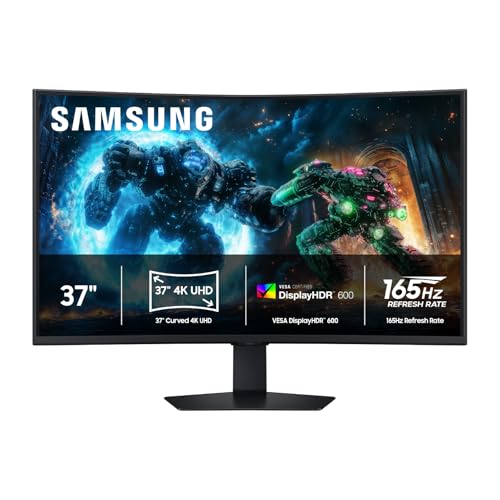 |
Samsung 37" Odyssey G7 Gaming Monitor | Curved Display | PRICES |
ASUS ROG Strix 27" 4K Gaming Monitor
|
✓ Exceptional 4K clarity with 160Hz refresh rate ✓ Fast IPS panel with 1ms response time ✓ G-Sync Compatible for smooth, tear-free gameplay ✓ Versatile USB-C connectivity with power delivery |
| Specification: | |
| Screen Size | 27 inches |
| Resolution | 3840 x 2160 (4K UHD) |
| Refresh Rate | 160Hz |
| Response Time | 1ms (GTG) |
| Panel Type | Fast IPS |
| Connectivity | HDMI, DisplayPort, USB-C |
The ASUS ROG Strix XG27UCS arrives with the imposing gamer aesthetic you'd expect from the Republic of Gamers line, but with a surprisingly sleek profile. The 27-inch screen feels substantial, and the thin bezels immediately signal this is a modern display focused on immersion. The build quality is solid, with the stand offering a reassuring heft, though its design is more angular than some may prefer for a minimalist setup.
Setup was refreshingly straightforward. The monitor snaps onto the stand with a single click, requiring no tools. The on-screen display is navigated via a small joystick on the back, which is intuitive after a brief learning period. Connecting my PC via the included DisplayPort cable provided an instant signal, and I appreciated the inclusion of a USB-C cable in the box for connecting a laptop, which streamlined the process significantly.
Performance is where this monitor truly shines. The combination of 4K resolution and a 160Hz refresh rate is transformative for gaming. Details in open-world games are razor-sharp, and the high refresh rate makes fast-paced shooters feel incredibly fluid. The 1ms response time lives up to its promise, with virtually no perceptible ghosting. The Extreme Low Motion Blur Sync technology works seamlessly with G-Sync Compatibility to eliminate screen tearing without introducing noticeable input lag.
The feature set is robust and thoughtfully implemented. The USB-C port is a standout, handling video, data, and up to 90W of power delivery to a connected laptop, effectively decluttering my desk. The DisplayWidget software allows for easy adjustments from the desktop, which is more convenient than using the physical controls. The tripod socket on the top is a unique touch for content creators wanting to mount a camera or light.
Compared to other 4K gaming monitors in its class, the XG27UCS holds its own. It offers a higher refresh rate than many 60Hz or 120Hz 4K options, and its Fast IPS panel provides better color and viewing angles than comparable VA panels, though its contrast ratio isn't as deep. Against ASUS's own higher-end models, it sacrifices full-array local dimming for HDR but gains a more accessible price point.
For the price, the ASUS ROG Strix XG27UCS represents outstanding value. It delivers a premium 4K high-refresh-rate experience, a versatile USB-C hub, and reliable adaptive sync performance, all backed by a 3-year warranty. While enthusiasts might crave more advanced HDR, this monitor strikes a near-perfect balance of performance, features, and cost for the serious gamer or creator who wants it all in one display.
ASUS TUF Gaming 27" 4K Monitor
|
✓ Exceptional 4K clarity and color accuracy ✓ Super-smooth 160Hz refresh rate ✓ Robust G-SYNC and FreeSync Premium compatibility ✓ Solid build quality with 3-year warranty |
✗ HDR performance is good but not top-tier ✗ On-screen display controls can be finicky |
| Specification: | |
| Screen Size | 27 inches |
| Resolution | 3840 x 2160 (4K UHD) |
| Refresh Rate | 160Hz |
| Response Time | 1ms (GTG) |
| Adaptive Sync | NVIDIA G-SYNC Compatible, AMD FreeSync Premium |
| Color Gamut | 95% DCI-P3 |
Unboxing the ASUS TUF Gaming monitor, the first impression is one of understated professionalism rather than gamer-centric flair. The stand is remarkably sturdy, with a simple yet effective design that allows for height, tilt, swivel, and pivot adjustments. The bezels are pleasingly thin on three sides, making the 27-inch screen look modern and focused on the content.
Setup was straightforward. The stand clicks securely into the monitor, and the included cables cover the essentials. Connecting to my gaming PC via DisplayPort was plug-and-play, and the monitor immediately recognized the 4K signal. The physical joystick control on the back for the on-screen menu is a welcome touch, though navigating the menus takes a little getting used to.
Performance is where this monitor truly excels. The 4K resolution delivers stunning detail in games, making textures and distant objects incredibly sharp. The 160Hz refresh rate, combined with the 1ms response time, creates buttery-smooth motion that eliminates perceptible blur in fast-paced shooters and racing games. The adaptive sync technologies worked flawlessly to eliminate screen tearing without introducing noticeable input lag.
The feature set is well-considered for a gamer. The Extreme Low Motion Blur (ELMB) sync technology can be used alongside adaptive sync, which is a great combo for crystal-clear motion. The DisplayWidget software allows for easy settings adjustments from your desktop, which is more convenient than the physical buttons. The 95% DCI-P3 color coverage makes games and media look vibrant and rich.
Compared to other 4K gaming monitors in its price range, the ASUS TUF holds its own. It offers a higher refresh rate than many 60Hz or 120Hz 4K options, and its color performance is superior to more basic models. While it may not have the extreme HDR brightness of a premium mini-LED display, it provides a more balanced package for the price.
For the value, the ASUS TUF Gaming VG27UQ1A is an outstanding proposition. It packs high-end gaming specs—4K, high refresh rate, fast response—into a reliable, warranty-backed package without a stratospheric price tag. It’s a monitor that doesn’t force you to choose between resolution and speed, making it a fantastic centerpiece for a serious gaming setup.
Dell 27 Plus 4K Gaming Monitor
|
✓ Excellent 4K clarity and color accuracy ✓ Smooth 120Hz refresh rate with FreeSync ✓ Clean, versatile design with thin bezels ✓ Useful integrated speaker system |
✗ Lacks advanced gaming features like HDR ✗ Stand only offers tilt adjustment |
| Specification: | |
| Screen Size | 27-inch |
| Resolution | 3840 x 2160 (4K UHD) |
| Refresh Rate | 120Hz |
| Panel Type | IPS |
| Adaptive Sync | AMD FreeSync Premium |
| Color Coverage | sRGB 99% |
The Dell 27 Plus 4K Monitor arrives with a sophisticated, minimalist aesthetic that immediately elevates any desk setup. The ash white finish and remarkably thin bezels give it a premium, modern look that feels at home in both gaming and professional environments. Unboxing it, the build quality feels solid and distinctly Dell, promising a reliable piece of hardware right from the start.
Setup was a straightforward affair. The monitor snaps securely onto its stand with a simple click, though it’s worth noting the stand only provides tilt adjustment, lacking height, swivel, or pivot options. Connecting via HDMI 2.1 was plug-and-play, and the on-screen display menu, navigated by a small joystick on the back, is intuitive and responsive, making initial configuration quick and easy.
In performance, this monitor is a delight for 4K gaming. The 120Hz refresh rate, a notable step up from the standard 60Hz for 4K displays, provides a noticeably smoother experience in fast-paced titles, and the AMD FreeSync Premium support effectively eliminates screen tearing. The IPS panel delivers vibrant colors and wide viewing angles, though the 1500:1 contrast ratio means blacks aren’t as deep as on a VA panel, and the lack of true HDR is felt in darker game scenes.
The feature set is well-considered for its class. The 99% sRGB color coverage makes it suitable for casual content creation alongside gaming, and the integrated speakers, while not replacing a dedicated setup, are surprisingly decent for system sounds or casual video watching. The ComfortView feature, which reduces blue light emission, is a welcome addition for long gaming sessions, helping to minimize eye strain.
Compared to other 4K gaming monitors in its price range, the Dell S2725QS holds its own by offering a balanced package. It trades the aggressive gamer aesthetics and sometimes higher refresh rates of dedicated gaming brands for Dell's reliability, superior color accuracy, and cleaner design. It sits comfortably as a high-performance all-rounder rather than a hardcore esports specialist.
For the value, this monitor is a compelling proposition. It delivers the coveted combination of 4K resolution and a high refresh rate without a prohibitive price tag. While enthusiasts might miss HDR and a fully adjustable stand, the core experience—stunning detail, smooth motion, and excellent color—is delivered superbly, making it an excellent choice for gamers and multitaskers who want a sharp, fluid, and versatile display.
ASUS ROG Strix 32" 4K Gaming Monitor
|
✓ Stunning 4K HDR image quality ✓ Incredibly smooth 160Hz refresh rate ✓ Fast IPS panel with 0.3ms response ✓ Versatile USB-C connectivity |
✗ Premium price point is very high ✗ Requires a powerful graphics card |
| Specification: | |
| Screen Size | 32 inches |
| Resolution | 3840 x 2160 (4K) |
| Refresh Rate | 160Hz (4K) / 320Hz (FHD Mode) |
| Response Time | 0.3ms (GTG) |
| Panel Type | Fast IPS |
| Connectivity | HDMI, DisplayPort, USB-C |
Unboxing the ASUS ROG Strix XG32UCG is an experience in itself. The monitor feels premium, with a solid, aggressive stand that screams gaming pedigree. The 32-inch screen is imposing, and the bezels are satisfyingly thin, promising an immersive view before you even power it on. The build quality is exactly what you'd expect from the ROG lineup.
Setup was straightforward. The stand attaches with a single thumbscrew, and the cable management is cleverly integrated. I connected it via DisplayPort to my PC and used the included USB-C cable for my laptop. The on-screen display, controlled by a small joystick on the back, is intuitive and packed with gaming-centric options, making initial calibration simple.
Performance is where this monitor truly shines. The 4K resolution delivers breathtaking detail in games, from individual blades of grass to textures on armor. The 160Hz refresh rate, combined with the near-instant 0.3ms response time and G-SYNC compatibility, makes motion buttery smooth and utterly devoid of ghosting or tearing. Fast-paced shooters feel incredibly responsive, and the HDR support adds a realistic punch to highlights and shadows.
The feature set is deep and thoughtful. The Dual Mode function, allowing a switch to 1080p at 320Hz, is a niche but interesting option for competitive esports. The USB-C port with power delivery is a fantastic addition for single-cable laptop connectivity. The inclusion of a tripod socket for mounting cameras or accessories is a unique touch that streamlines a streaming setup.
Compared to other 4K high-refresh monitors, the XG32UCG holds its own against the best. Its Fast IPS panel offers better viewing angles and color consistency than many VA alternatives, though perhaps not the absolute deepest blacks. It trades blows with monitors like the LG UltraGear, but the ASUS often wins on pure gaming features and its aggressive, gamer-friendly design language.
The value proposition is complex. There's no denying this is a luxury item with a price tag to match. However, for the serious gamer or content creator who demands the pinnacle of 4K gaming performance, versatile connectivity, and robust build quality, the investment is justified. It's a monitor that doesn't just keep up with today's high-end GPUs—it pushes them to deliver a spectacular experience.
Samsung 37" Odyssey G7 Gaming Monitor
|
✓ Stunning 4K resolution with vibrant HDR 600 ✓ Ultra-smooth 165Hz refresh rate ✓ Exceptionally immersive 1000R curved screen ✓ Fast 1ms response time with FreeSync Premium Pro |
| Specification: | |
| Screen Size | 37 inches |
| Resolution | 3840 x 2160 (4K UHD) |
| Refresh Rate | 165Hz |
| Response Time | 1ms (GtG) |
| HDR Certification | VESA DisplayHDR 600 |
| Adaptive Sync | AMD FreeSync Premium Pro |
Unboxing the Samsung Odyssey G7 is an event in itself. The monitor feels substantial and premium, with its sleek, white matte finish and aggressive, gamer-centric stand. The 1000R curve is immediately striking, promising a wrap-around visual experience before it's even powered on. The build quality is solid, and the design, while bold, manages to avoid looking overly tacky.
Setup is straightforward, though the monitor's large footprint and heavy stand demand a spacious, sturdy desk. The stand offers good height, tilt, and swivel adjustment, making it easy to find a comfortable viewing angle. Connecting via DisplayPort or HDMI 2.1 is simple, and the on-screen display, controlled by a small joystick on the back, is intuitive to navigate for adjusting settings.
Performance is where this monitor truly shines. The 4K resolution delivers breathtaking detail in games, making textures and distant objects incredibly sharp. The 165Hz refresh rate, combined with the 1ms response time, makes for buttery-smooth motion with virtually no ghosting. Fast-paced shooters feel incredibly responsive, and the AMD FreeSync Premium Pro ensures a tear-free experience even during demanding, graphically intense scenes.
The feature set is robust. The VESA DisplayHDR 600 support provides a noticeable boost in contrast and color vibrancy over SDR content, though it doesn't reach the eye-searing brightness of more expensive HDR 1000 displays. The 1000R curvature is a game-changer for immersion, pulling you into the action. The inclusion of a core lighting feature on the back adds a nice ambient touch to your setup.
Compared to other 4K high-refresh monitors, the Odyssey G7's aggressive curve is its defining characteristic. It offers a more immersive experience than flat panels like the LG 27GP950, though the curve may not be ideal for color-critical professional work. Its combination of specs sits in a sweet spot between high-end 4K/144Hz monitors and the more expensive 4K/240Hz models, offering excellent performance without the extreme premium.
For the serious gamer who wants a deeply immersive, high-performance 4K experience, the Samsung Odyssey G7 represents strong value. It bundles a top-tier resolution, a high refresh rate, and a transformative curved screen into one package. While the HDR performance isn't class-leading, the overall gaming experience is exceptional, justifying its position as a premium monitor for those who want to be surrounded by their game world.
What Is The Best 4K Gaming Monitor For Competitive Esports?
Choosing the best 4K gaming monitor for competitive esports requires balancing high resolution with blistering speed. While 4K offers incredible detail, the monitor must also deliver the high refresh rates and low latency that esports professionals demand to track fast-moving action flawlessly.
The ideal monitor combines a 4K UHD panel with a refresh rate of 144Hz or higher and a response time of 1ms or less. Features like NVIDIA G-SYNC or AMD FreeSync Premium are essential to eliminate screen tearing, while specific technologies like Extreme Low Motion Blur (ELMB) further enhance motion clarity during intense matches.
- Refresh Rate
- Response Time
- Motion Blur Reduction
- Adaptive Sync
1. Refresh Rate: A high refresh rate (144Hz+) is critical for smooth, fluid gameplay, allowing you to see and react to actions faster.
2. Response Time: A 1ms or lower gray-to-gray response time minimizes ghosting and motion blur, ensuring sharp visuals during rapid movements.
3. Motion Blur Reduction: Technologies like ASUS ELMB Sync help to further sharpen moving images, crucial for tracking fast-moving targets.
4. Adaptive Sync: G-SYNC Compatible or FreeSync Premium certification ensures variable refresh rate support for tear-free gaming with modern graphics cards.
What Factors Should I Consider When Buying A 4K Gaming Monitor?
Selecting a 4K gaming monitor involves more than just resolution. You must evaluate a suite of features that impact visual fidelity, responsiveness, and overall gaming immersion. The right balance depends on your primary games, GPU capabilities, and budget.
Key considerations include the panel technology for color and speed, the available connectivity for next-gen consoles and PCs, and the physical design for your setup. Warranty length and brand support are also important for a long-term investment like a high-end monitor.
- Panel Type
- Refresh Rate and Sync
- HDR Certification
- Connectivity Options
1. Panel Type: Fast IPS panels offer the best balance of speed, color accuracy, and viewing angles for gaming, compared to VA or TN.
2. Refresh Rate and Sync: Aim for at least 120Hz paired with Adaptive Sync (G-SYNC/FreeSync) for smooth, tear-free performance at high frame rates.
3. HDR Certification: Look for VESA DisplayHDR ratings (like HDR400 or HDR600) for improved contrast and brightness in supported games.
4. Connectivity Options: Ensure the monitor has modern ports like HDMI 2.1 for consoles and USB-C with power delivery for single-cable laptop connectivity.
What Key Specs Matter Most For 4K Gaming?
The most important specifications for a 4K gaming monitor directly determine your visual experience and gameplay responsiveness. While resolution defines detail, other specs like refresh rate and response time define performance.
Understanding these specs helps you avoid bottlenecks where your monitor cannot keep up with your PC or console. Prioritizing the right combination ensures you get the full benefit of your hardware investment without compromise.
- Refresh Rate
- Response Time
- Adaptive Sync Technology
- HDR Performance
1. Refresh Rate: A high refresh rate (120Hz, 144Hz, 160Hz) is essential for smooth gameplay, making high frame rates from your GPU visibly smoother.
2. Response Time: A low response time (1ms GtG) is crucial to eliminate smearing and ghosting in fast-paced games, preserving image clarity.
3. Adaptive Sync Technology: G-SYNC Compatible or FreeSync Premium support synchronizes the monitor's refresh rate with your GPU's output to eliminate screen tearing.
4. HDR Performance: VESA DisplayHDR certifications and wide color gamuts (like 95% DCI-P3) enhance contrast, brightness, and color for more immersive visuals.
Which Brands Are Most Recommended For 4K Gaming Monitors?
Several brands have established strong reputations in the 4K gaming monitor market by consistently delivering performance, innovation, and reliability. These manufacturers often lead in introducing new technologies like ultra-high refresh rates on 4K panels and advanced motion blur reduction.
Recommended brands typically offer robust warranties, good customer support, and software utilities for customizing the monitor's settings. Their focus often targets specific gamer segments, from esports competitors to immersive single-player enthusiasts.
- ASUS ROG and TUF
- Samsung Odyssey
- Dell
- LG
1. ASUS ROG and TUF: Known for high-performance features like extreme refresh rates, ELMB Sync, and gaming-centric designs with robust warranties.
2. Samsung Odyssey: Offers cutting-edge panel technology, often with high curvature for immersion, and strong HDR performance with Quantum Dot.
3. Dell: Provides professional-grade build quality, accurate colors, and reliable performance, often with sleek designs and good customer support.
4. LG: Delivers great value and reliability with strong IPS panel offerings, often featuring good color accuracy and versatile connectivity.
How Should I Use My 4K Gaming Monitor?
Proper setup and calibration are key to unlocking the full potential of your 4K gaming monitor. Correct usage ensures you experience the intended visual quality, performance, and ergonomic comfort during long gaming sessions.
Taking time to configure settings for your specific games and environment can dramatically improve your experience. Utilizing the monitor's built-in features and companion software also helps streamline control and optimization.
- Graphics Card Connection
- On-Screen Display (OSD) Calibration
- Gaming Mode Selection
- Companion Software
1. Graphics Card Connection: Use a high-bandwidth cable like DisplayPort 1.4 or HDMI 2.1 to support 4K at high refresh rates with Adaptive Sync enabled.
2. On-Screen Display (OSD) Calibration: Adjust settings like GamePlus overlays, refresh rate indicators, and Adaptive-Sync toggle for optimal gaming.
3. Gaming Mode Selection: Utilize preset modes (e.g., FPS, RTS, Racing) or create custom profiles to optimize contrast, color, and response time for different game genres.
4. Companion Software: Use manufacturer software like ASUS DisplayWidget for easy on-screen display control and customization directly from your desktop.
When Should I Replace My 4K Gaming Monitor?
The lifespan of a 4K gaming monitor is typically several years, but technological advances and physical wear can signal the need for an upgrade. Knowing when to replace it ensures you stay current with features that enhance both performance and visual immersion.
Replacement is often driven by the desire for new technology rather than complete failure. However, physical defects or a significant decline in performance are clear indicators that an upgrade is due.