If you have ever compared graphics cards you have seen the term shader cores. What are shader cores in a gaming graphics card is the question that trips up many buyers because the number looks important but the meaning changes by brand. NVIDIA calls them CUDA cores.
AMD calls them stream processors. Intel uses Xe cores. The core count alone does not tell you how fast a card will be in games.
Manufacturer specifications confirm that a modern mid-range GPU can pack several thousand of these cores. The RTX 4070 Super ships with 7168 CUDA cores while the Radeon RX 7800 XT offers 3840 stream processors. Those numbers are not directly comparable because each architecture handles work differently.
We will break down what actually matters for your resolution and budget.
What Are Shader Cores in a Gaming Graphics Card
Shader cores are the tiny processors inside a GPU that run the math for every pixel and vertex on screen. Each core handles a simple instruction at the same time as thousands of others. This parallel design lets a graphics card draw complex 3D scenes at high frame rates.
More cores generally mean more raw throughput but architecture and clock speed shape the final result.
Why Shader Core Counts Matter When Comparing Gaming GPUs
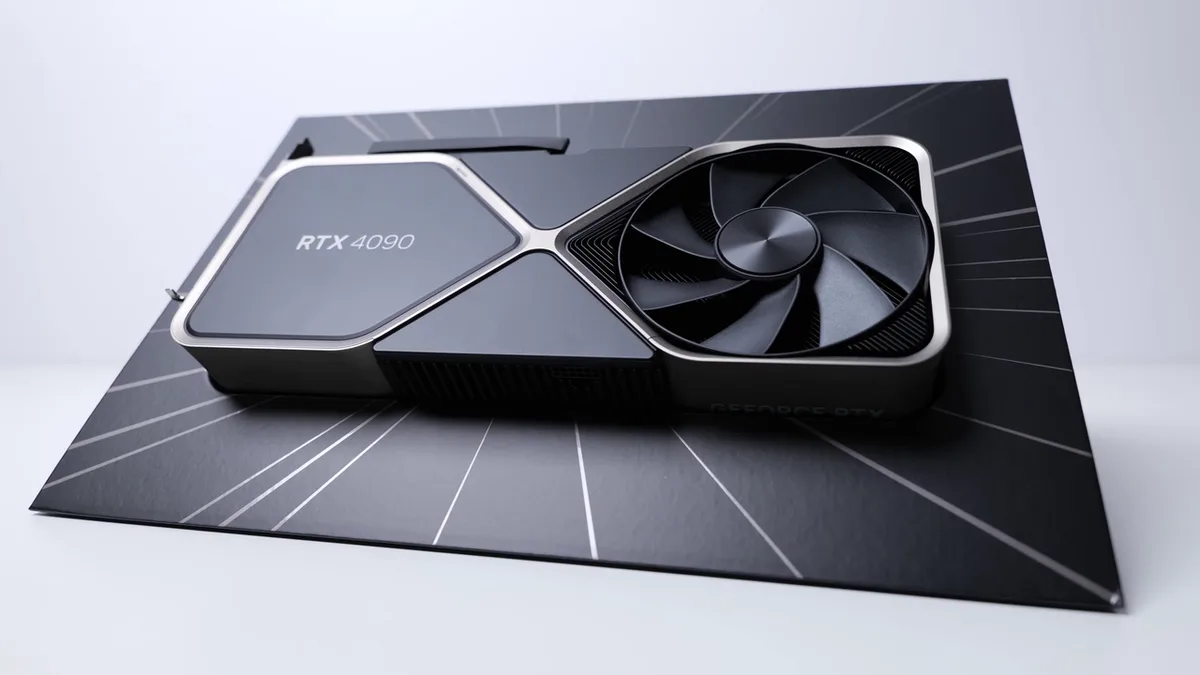
Core count gives you a rough idea of where a card sits in the product stack. A higher number usually signals a higher tier within the same generation and brand. The RTX 4090 packs 16384 CUDA cores while the RTX 4060 stops at 3072.
That gap explains much of the performance difference between an enthusiast card and an entry model.
You cannot compare core counts across vendors. NVIDIA's CUDA cores and AMD's stream processors use different scheduling and instruction sets. A card with fewer cores but higher clocks and a newer architecture can beat an older card with more cores.
The RTX 4070 with 5888 cores often matches or beats the RTX 3080 with 8704 cores because Ada Lovelace is more efficient per core than Ampere.
Core count also affects workloads beyond gaming. Video encoding 3D rendering and compute tasks scale well with more parallel units. If you stream or edit video the extra cores on a higher tier card reduce export times.
For pure gaming at 1080p the returns diminish once you pass the mid-range sweet spot.
CUDA Cores vs. Stream Processors vs. RT Cores: What the Specs Actually Mean
NVIDIA brands its unified shaders as CUDA cores. AMD uses the term stream processors for the same concept. Both handle vertex geometry pixel and compute shaders.
The names are marketing labels for the same fundamental hardware. What differs is how each architecture groups these cores into larger blocks.
NVIDIA groups 128 CUDA cores into a Streaming Multiprocessor or SM. AMD groups 64 stream processors into a Compute Unit or CU. Each SM or CU contains schedulers register files and shared memory.
The design choices change how well the hardware stays fed with work. NVIDIA tends to favor higher clock speeds while AMD often builds wider arrays with more CUs per chip.
RT cores and Tensor cores are specialized units not general shaders. RT cores accelerate ray triangle intersection tests. Tensor cores run matrix math for AI upscaling and denoising.
They sit alongside the shader cores on the same die. A card with more RT cores handles path traced lighting better even if its shader core count is similar to a rival.
Shader Model support is another spec to watch. Modern cards support Shader Model 6.7 which enables features like mesh shaders and sampler feedback. Older architectures may lack support for the latest techniques used in new game engines.
Check the feature matrix on the manufacturer site before you assume parity.
How Core Count Interacts With Clock Speed, Memory Bandwidth, and Real-World FPS
Core count sets the theoretical ceiling. Clock speed determines how many cycles per second each core completes. The product of cores times clock gives you peak FP32 throughput measured in TFLOPS.
The RTX 4070 Super hits roughly 36 TFLOPS while the RX 7800 XT lands near 37 TFLOPS. On paper they look close but games rarely hit peak throughput.
Memory bandwidth feeds the cores with textures and geometry data. A wide bus and fast VRAM keep the shader units busy. The RTX 4070 Super uses a 192-bit bus with 21 Gbps GDDR6X for 504 GB/s.
The RX 7800 XT uses a 256-bit bus with 19.5 Gbps GDDR6 for 624 GB/s. Higher bandwidth helps at 4K where texture loads are heavier.
Real-world FPS depends on how well the game engine balances work across the cores. Some titles scale almost linearly with core count. Others hit bottlenecks in the rasterizer or the driver overhead.
Aggregate reviews report that the RTX 4070 Super averages about 10 percent higher 1440p FPS than the RX 7800 XT in a mixed suite despite similar TFLOPS. Architecture efficiency wins.
Power limit also caps sustained clocks. A card with more cores but a tight power budget may throttle lower than a smaller chip with more headroom. The total graphics power or TGP spec tells you the cooling and power delivery target.
Always pair a high core count GPU with a PSU that meets the recommended wattage.
Best Gaming GPU Choices by Resolution: 1080p, 1440p, and 4K
At 1080p you do not need massive core counts. The RTX 4060 with 3072 CUDA cores or the RX 7600 with 2048 stream processors deliver 100+ FPS in most competitive shooters. Esports titles like Valorant and CS2 are often CPU limited at this resolution.
Spending more on cores yields diminishing returns unless you target 360 Hz panels.
1440p is the sweet spot where core count starts to matter more. The RTX 4070 Super at 7168 cores and the RX 7800 XT at 3840 cores both average 90 to 120 FPS in demanding AAA games with high settings. The extra cores on the NVIDIA card help with ray tracing workloads where the RT cores and shader cores share the load.
For pure rasterization the AMD card offers similar raster FPS per dollar.
4K gaming demands the highest core counts and memory bandwidth. The RTX 4080 Super with 10240 cores and the RX 7900 XTX with 6144 cores are the practical minimum for 60+ FPS in modern titles with max settings. The RTX 4090 at 16384 cores remains the only card that can push 4K high refresh in heavy path traced games like Cyberpunk 2077 with ray tracing overdrive.
Upscaling technologies like DLSS and FSR change the core count equation. They let you render at a lower internal resolution then reconstruct the image. This reduces the shader workload per frame.
A mid-range card with fewer cores can deliver a playable 4K experience using quality mode upscaling. Native 4K still favors raw core count and bandwidth.
Common Mistakes: Why More Shader Cores Don't Always Mean Better Performance
Buying the card with the highest core count in your budget seems logical. It often backfires because core count is only one variable in a larger equation. A last-gen flagship with more cores can lose to a current-gen mid-range card with fewer cores but higher IPC.
The RTX 3080 has 8704 CUDA cores yet the RTX 4070 with 5888 cores matches or beats it in most games at 1440p.
Ignoring VRAM capacity is another trap. A GPU with plenty of cores but only 8 GB of VRAM will stutter in modern titles at 1440p ultra once textures exceed the buffer. The RTX 4060 Ti 8 GB and 16 GB variants share the same 4352 core count.
The 16 GB model delivers far smoother 1440p performance in memory heavy games like Hogwarts Legacy or The Last of Us Part I.
Overlooking power and thermal limits hurts real-world clocks. Two cards with identical core counts can perform differently if one has a 200 W limit and the other 285 W. The higher power model sustains higher boost clocks longer.
Check the TGP spec and cooler design not just the core number.
Assuming core count scales linearly with ray tracing performance is wrong. RT workloads depend on dedicated RT cores and the BVH traversal hardware. A card with fewer shader cores but more RT cores per SM can outperform a raw shader monster in path traced scenes.
The RTX 4070 beats the RX 7800 XT in Cyberpunk 2077 RT Overdrive despite fewer total shaders.
Side-by-Side Spec Comparison: Current-Gen Mid-Range and Enthusiast Graphics Cards
The table below compares the key specs that matter alongside shader core counts. Prices reflect typical US street pricing as of 2026.
| Model | Shader Cores | RT Cores | Tensor Cores | VRAM | Bus Width | Bandwidth | TGP | MSRP |
|---|---|---|---|---|---|---|---|---|
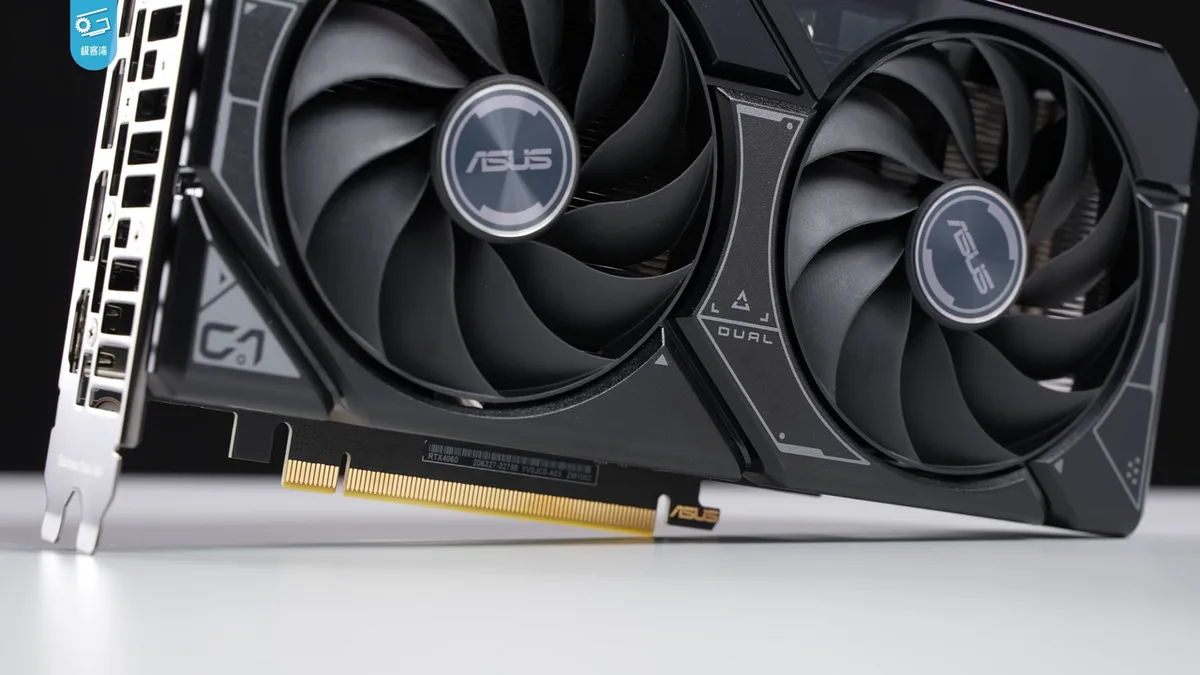
| RTX 4060 | 3072 | 24 | 96 | 8 GB GDDR6 | 128-bit | 272 GB/s | 115 W | $299 |
| RTX 4060 Ti | 4352 | 34 | 136 | 8/16 GB GDDR6 | 128-bit | 288 GB/s | 160 W | $399 |
| RTX 4070 Super | 7168 | 56 | 224 | 12 GB GDDR6X | 192-bit | 504 GB/s | 220 W | $599 |
| RTX 4080 Super | 10240 | 80 | 320 | 16 GB GDDR6X | 256-bit | 736 GB/s | 320 W | $999 |
| RX 7600 | 2048 | 32 | N/A | 8 GB GDDR6 | 128-bit | 288 GB/s | 165 W | $269 |
| RX 7800 XT | 3840 | 60 | N/A | 16 GB GDDR6 | 256-bit | 624 GB/s | 263 W | $499 |
| RX 7900 XTX | 6144 | 96 | N/A | 24 GB GDDR6 | 384-bit | 960 GB/s | 355 W | $999 |
Notice how AMD achieves competitive bandwidth with wider buses and conventional GDDR6 while NVIDIA relies on narrower buses paired with faster GDDR6X. The core count column uses each vendor's native terminology so direct cross-brand comparison remains imperfect. Use the TFLOPS and real-world benchmark columns in reviews for final decisions.
For 1080p high refresh the RTX 4060 or RX 7600 make sense. For 1440p the RTX 4070 Super and RX 7800 XT are the value leaders. For 4K the RTX 4080 Super and RX 7900 XTX trade blows with NVIDIA winning on ray tracing and AMD on raw raster value.
Match the card to your monitor not the biggest number on the box.
Frequently Asked Questions
How many shader cores do I need for 1440p gaming?
A modern GPU with roughly 5000 to 7500 shader cores such as the RTX 4070 Super or RX 7800 XT delivers 90 to 120 FPS in demanding titles at high settings.
Are CUDA cores and stream processors the same thing?
Yes they are both unified shader units that handle vertex geometry pixel and compute work. The names are vendor branding for functionally equivalent hardware.
Does a higher core count always mean better ray tracing?
No ray tracing performance depends on dedicated RT cores and BVH acceleration hardware. A card with fewer shader cores but more RT cores per SM can win in RT heavy scenes.
Can I compare core counts across different generations?
Not reliably. Architectural improvements like higher IPC better scheduling and larger caches let newer cores do more work per cycle. A 5000 core Ada GPU often beats an 8000 core Ampere GPU.
How do I check my GPU's shader core count?
Open GPU-Z or check the specifications page on the manufacturer website. The core count is listed as CUDA cores for NVIDIA stream processors for AMD and Xe cores for Intel.
Do shader cores affect video editing and 3D rendering?
Yes most creative workloads scale well with core count. More cores reduce render times in Blender DaVinci Resolve and Premiere Pro especially when using GPU accelerated effects.