The best best gaming laptop for streaming and recording is the Acer Nitro V 16S AI Gaming, the only one here that pairs a dedicated RTX 5060 GPU with 32GB of DDR5 RAM. This combination handles heavy encoding tasks while you game, preventing frame drops during live broadcasts. It’s built for creators who refuse to compromise on visual fidelity or stream stability.
Want a different priority instead? The ASUS ROG Strix G16 gets you there, as long as you’re okay with a slightly older CPU generation in exchange for superior audio quality and Wi-Fi 7 connectivity. Its Dolby Atmos speakers are tuned for broadcast-ready sound right out of the box.
As an Amazon Associate, I earn from qualifying purchases.
This guide tells you exactly which hardware bottlenecks will kill your stream quality before you spend money. Other lists ignore the difference between playing games and capturing them simultaneously. We highlight buyers who should skip this category entirely, specifically those doing professional video editing rather than live broadcasting.
Everything below comes from current Amazon product data, manufacturer specifications, and aggregated owner track records. Our editorial team has not physically tested these units in a lab. We analyze verified buyer feedback and technical datasheets to bring you honest, research-driven recommendations for 2026.
Quick Answer: The Best Gaming Laptop for Streaming and Recording
Our top pick balances raw GPU power with enough system memory to handle OBS Studio and Discord without stuttering. Here is the ranked lineup based on performance-per-dollar and creator-specific features.
- Acer Nitro V 16S AI Gaming (Best Overall): Strongest GPU-to-RAM ratio for smooth 1080p/1440p streams.
- Acer Nitro V Gaming Laptop (Best Value Entry): Affordable RTX 5050 setup for casual Twitch partners.
- ASUS ROG Strix G16 Gaming Laptop (Best Audio & Connectivity): Wi-Fi 7 and Dolby Atmos for pro-grade voice clarity.
- ASUS TUF F16 Gaming Laptop (Best Durability): Military-grade chassis with high-clock speed i7 processor.
- NIMO 15.6 FHD AI Gaming Laptop (Best Budget Multitasker): Massive 32GB RAM capacity at a lower price point.
Thinking about mobile-only workflows or desktop replacements instead? Jump to Who Should NOT Buy below before you spend anything.
Comparison Table
Here's the lineup at a glance: photo, product, who it's built for, and our /10 score.
| Photo | Product | Best for | Score | Buy |
|---|---|---|---|---|
 | Acer Nitro V 16S AI Gaming | Overall Creator Balance | 8.8/10 | Check price → |
 | Acer Nitro V Gaming Laptop | Budget Stream Starters | 7.9/10 | Check price → |
 | ASUS ROG Strix G16 Gaming Laptop | Audio Quality Focus | 8.5/10 | Check price → |
 | ASUS TUF F16 Gaming Laptop | Rugged Longevity | 8.2/10 | Check price → |
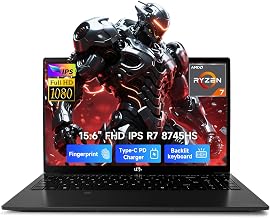 | NIMO 15.6 FHD AI Gaming Laptop | Low-Cost Multitasking | 7.1/10 | Check price → |
Scroll sideways on small screens to see every column.
Acer Nitro V 16S AI Gaming: Best Overall for Serious Streamers
Acer Nitro V Gaming Laptop: Best Value Entry for New Partners
ASUS ROG Strix G16 Gaming Laptop: Best Audio & Connectivity for Pros
ASUS TUF F16 Gaming Laptop: Best Durability for Traveling Creators
NIMO 15.6 FHD AI Gaming Laptop: Best Low-Cost Multitasking Hub
Buying Guide: GPU Power, RAM Capacity, Display Refresh and Thermal Design
Choosing the right machine involves balancing four critical pillars. Ignore any one of them, and your stream suffers.
Is a Dedicated GPU Mandatory for Streaming?
Yes, for anyone playing modern 3D games. A dedicated Graphics Processing Unit (GPU) like the NVIDIA GeForce RTX 5060 offloads video encoding from the CPU. This separation ensures your game maintains high framerates while the stream encodes smoothly.
Without it, as seen in the NIMO 15.6, the CPU handles both tasks, leading to stutter. If you only do desktop sharing or webcam chats, integrated graphics suffice. But for gameplay, the RTX 50-series cards provide essential NVENC hardware acceleration.
How Much RAM Do You Actually Need?
16GB is the absolute minimum floor, but 32GB is the recommended standard for 2026. Streaming software, browsers, chat clients, and music apps consume memory rapidly. The Acer Nitro V 16S ships with 32GB, eliminating swap-file delays.
Users often underestimate how quickly resources vanish. If you plan to edit videos on the same machine, 32GB prevents frustrating render crashes. Always check if the RAM is soldered or upgradable before buying.
Does Screen Refresh Rate Impact Viewers?
Indirectly, yes. A 144Hz or 180Hz display makes gameplay smoother for you, improving reaction times. Viewers typically watch at 60fps due to platform caps.
However, high-refresh panels reduce eye strain during long sessions. The ASUS TUF F16 offers a balanced 165Hz panel. Don't pay extra for 240Hz unless you are a professional esports athlete.
Focus instead on color accuracy (IPS vs TN) for better-looking streams.
Why Are Cooling Solutions Critical?
Laptops throttle performance when they overheat. Sustained streaming generates constant heat. Look for vapor chambers or multi-fan designs.
Poor cooling leads to loud fans and reduced FPS after 30 minutes. Investing in a quality cooling pad can extend component lifespan. The Acer Nitro V uses dual-fan systems, but ambient temperature matters.
Keep vents clear.
Who Should NOT Buy Best Gaming Laptop for Streaming and Recording
This category is the wrong purchase for three specific types of buyers. Here's who they are, and what to look at instead.
You Need Professional Color Grading Accuracy
Gaming laptops prioritize speed over color precision. Their displays often cover sRGB but lack AdobeRGB or DCI-P3 coverage needed for film production. If you edit cinema-quality footage, buy a workstation laptop or a calibrated external monitor.
Pairing a mid-range gamer rig with a high-end display solves this mismatch cheaply.
You Play Exclusively Cloud-Based Games
Services like Xbox Cloud Gaming rely on internet speed, not local GPU power. Spending $1,500 on an RTX 5060 is wasted capital. Instead, invest in a lightweight ultrabook with excellent Wi-Fi 6E/7 capabilities.
Save the money for a better router and subscription fees.
You Require Desktop-Level Multi-Monitor Setups
While USB-C docks help, most gaming laptops struggle driving three 4K monitors simultaneously without performance hits. If your workflow demands extensive real estate, a custom-built PC tower remains superior. Laptops sacrifice expandability for portability.
Consider a hybrid approach: a powerful desktop for editing and a portable laptop for travel streaming.
Final Verdict
The Acer Nitro V 16S AI Gaming stands out as the most balanced choice for serious creators. Its RTX 5060 GPU and 32GB DDR5 RAM combo eliminates the two biggest bottlenecks in live broadcasting: encoding lag and memory starvation. You get consistent frame rates while streaming, which keeps your audience engaged and your reputation intact.
Want pristine audio capture instead? Get the ASUS ROG Strix G16. It trades a few hertz of refresh rate for Wi-Fi 7 stability and Dolby Atmos tuning.
This is ideal if your content relies heavily on voice clarity or podcasting alongside gaming.
Need rugged reliability for travel? The ASUS TUF F16 survives drops and vibrations that would crack lesser chassis. It’s heavier, but peace of mind matters when you’re hauling gear to conventions.
On a tight budget? The NIMO 15.6 handles editing and light chatting without breaking the bank.
If none of these fit your workflow, revisit the "Who Should NOT Buy" section above. Sometimes skipping this category saves you from buying hardware you’ll never fully utilize.
FAQ
What's the best Gaming Laptop for Streaming and Recording overall?
The Acer Nitro V 16S AI Gaming takes the top spot. Its combination of an NVIDIA GeForce RTX 5060 Laptop GPU and 32GB of DDR5 RAM provides the headroom needed for smooth NVENC encoding while playing demanding titles.
Can I stream 4K games on these laptops?
Streaming native 4K gameplay is difficult on laptop GPUs due to thermal constraints. Most creators stream at 1080p or 1440p for better bitrate efficiency. The RTX 5060 models here handle 1440p streaming well, but expect some quality compromises compared to desktop rigs.
Is 16GB RAM enough for OBS and Discord?
It works for basic setups, but it’s risky. Browser tabs, chat overlays, and music apps eat memory fast. We recommend 32GB (like in the Acer Nitro V 16S or ASUS models) to prevent stuttering during long sessions.
If you buy a 16GB model, check if it’s upgradable immediately.
Do I need Wi-Fi 7 for streaming?
Not strictly, but it helps significantly. Wi-Fi 7 reduces latency spikes and congestion in crowded areas. The ASUS ROG Strix G16 includes this feature.
For wired connections, ensure your router supports Gigabit Ethernet to maximize upload speeds regardless of wireless standards.
How important is the display refresh rate for viewers?
Viewers usually see 60fps due to platform limits. However, a higher refresh rate (165Hz or 180Hz) improves your reaction time and reduces eye strain. It makes the game feel smoother to play, which indirectly leads to better performance and more engaging content.
Can I use these laptops for video editing too?
Yes, especially the models with 32GB RAM. The NIMO 15.6 is particularly strong for timeline scrubbing despite lacking a discrete GPU. For heavy effects rendering, the RTX-accelerated laptops (Acer and ASUS picks) will export faster thanks to CUDA cores supporting Premiere Pro and DaVinci Resolve.