Is a gaming laptop better than a PS5? It depends on where you play, what you play, and how much you want to spend. Neither device wins every category.
The right pick comes down to your habits, not just raw specs.
A PS5 starts at $499.99 for the disc edition and plugs straight into your TV. A capable gaming laptop starts around $800 and climbs past $3,000. That price gap alone changes the math for most buyers.
is a gaming laptop better than a PS5
A gaming laptop wins on portability, mods, and higher frame rates. A PS5 wins on price and couch simplicity. The PS5 starts at $499.99.
Gaming laptops start around $800. Match the device to where you actually play.
Why "Better" Depends on Where You Actually Play
The word "better" hides a trap. People compare specs on paper and ignore where they actually game. A laptop on a kitchen table is a different experience than a console on a 65-inch OLED.
Think about your week. Do you game on a couch after work? Do you travel for school or work?
Do you want mods and PC storefront deals? Each answer points a different direction.
There is no universal winner here. There is only the right fit for your space, budget, and library. As of 2026, both platforms run the same big third-party games.
The difference is how you access them.
Portability is the laptop's clearest edge. You can game on a plane, in a dorm, or at a hotel. The PS5 needs a TV, power, and space.
If you never leave your living room, that edge disappears.
Price cuts the other way. The PS5 delivers strong performance for under $500. A laptop matching that power costs more and runs hotter.
For pure value per dollar, the console still leads.
What You're Really Getting With a Gaming Laptop
A gaming laptop is a full Windows PC built around a discrete GPU. That means a dedicated graphics chip separate from the processor. It is the reason laptops can run modern games at all.
Inside you get a mobile CPU, a mobile GPU, NVMe SSD storage, and 16GB or 32GB of RAM. The screen is built in, usually 15.6 or 16 inches. You also get a keyboard, trackpad, and battery.
The GPU is the heart of the machine. Mobile chips from NVIDIA and AMD trade some power for heat and size. A mobile RTX 4060 runs around 10 to 12 teraflops depending on its power limit.
That is close to the PS5's 10.28 teraflops, but thermals matter.
Thermals are the real story. Laptops throttle when hot. Fan noise rises.
Battery life while gaming drops to roughly one to two and a half hours. You are buying portability, not silence.
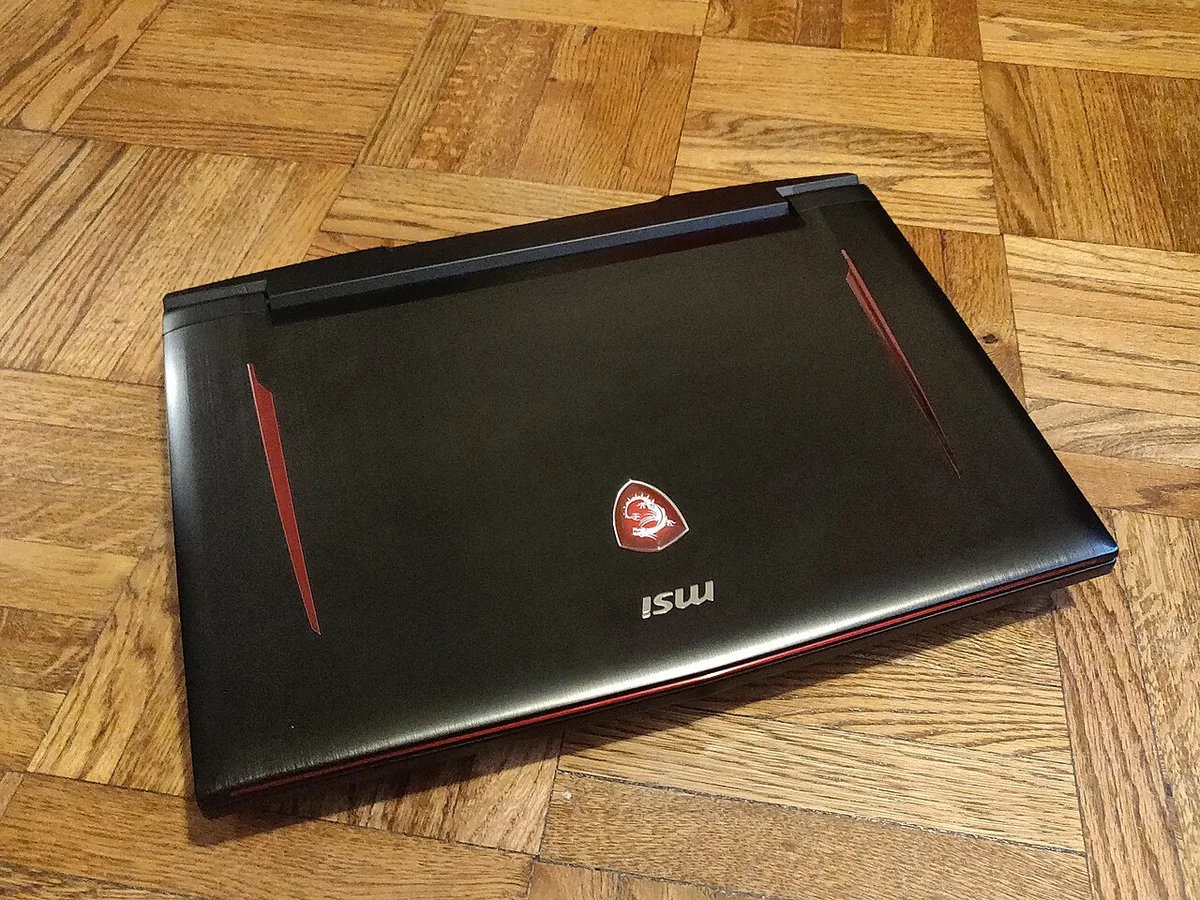
Image source: Wikimedia Commons / Falcon Northwest (CC BY-SA)
You also buy flexibility. Steam sales, Epic free games, PC Game Pass, and mods are all on the table. A laptop doubles as a work machine.
If you want one device for everything, this is it.
Upgrade paths are limited though. RAM and storage are sometimes soldered. The GPU is never swappable.
Plan to keep the machine three to five years, then replace it.
If you are weighing brands, warranty coverage differences matter more than you think. Premium chassis like the Razer Blade cost more partly for build quality. Budget options from lesser-known brands can work but need careful research.
What the PS5 Actually Delivers
The PS5 is a fixed-spec console tuned for one job. Sony designed every part to work together. That means no driver updates, no settings menus, and no compatibility headaches.
The hardware is solid. A custom AMD Zen 2 CPU and RDNA 2 GPU deliver 10.28 teraflops. The 825GB SSD loads games fast.
The DualSense controller adds haptic feedback and adaptive triggers that PC games rarely match.
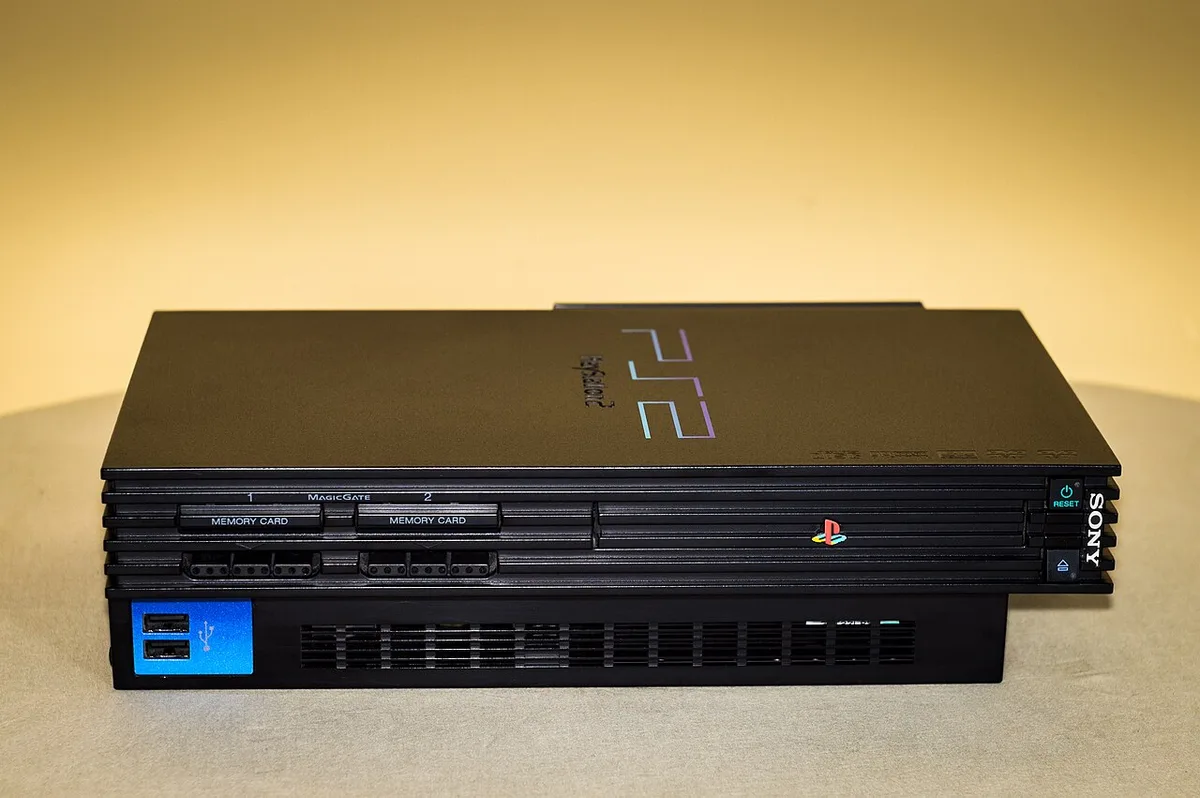
Image source: Wikimedia Commons / Deni Williams from São Paulo, Brasil / Brazil (CC BY)
Sony's first-party games are the real draw. Titles like God of War Ragnarök and Spider-Man 2 run at 60 frames per second with ray tracing. These games do not come to PC on day one, and some never do.
The couch experience is unmatched. You sit ten feet from a big screen with a controller. No desk, no mouse, no cables.
For living-room gaming, nothing beats it.
Setup is simple. You plug in power and HDMI, connect to Wi-Fi, and play. There is no Windows bloat, no driver conflicts, no antivirus.
Parents appreciate this. So do people who just want to game.
The PS5 also supports PS VR2 for virtual reality. That is a real advantage if VR interests you. PC VR exists but costs more and needs more setup.
Storage is the weak point. The 825GB drive fills fast with 100GB-plus games. You can add an M.2 SSD, but it adds cost.
The PS5 Pro at $699.99 improves graphics but widens the price gap further.
Gaming Laptop vs PS5: Specs, Price, and Performance Side by Side
Here is how the two stack up on the numbers that matter most.
| Factor | Gaming Laptop | PS5 (Disc) |
|---|---|---|
| Starting price | ~$800 | $499.99 |
| GPU power | 10-12 TFLOPS (mobile) | 10.28 TFLOPS |
| Storage | 512GB-2TB NVMe | 825GB (1TB on Slim/Pro) |
| Resolution target | 1080p-1440p typical | 1080p-4K with upscaling |
| Frame rate | 60-144+ fps | 30-120 fps |
| Power draw | 150-330W | ~200W |
| Weight | 2-2.8 kg | ~4.5 kg (console) |
| Portability | High | None |
| Mod support | Yes | No |
| Exclusives | No | Yes |
| Upgradeability | Limited | None |
The laptop costs more but does more. It is a computer, not just a console. The PS5 costs less and plays games better out of the box.
On raw gaming performance, they are closer than marketing suggests. A $1,200 laptop with an RTX 4060 matches or beats PS5 visuals at 1080p. At 4K, the PS5's fixed tuning helps it punch above its weight.
The laptop's real advantage is frame rate headroom. With DLSS 3 or FSR 3, you can push past 100 frames per second. Competitive players notice.
Casual players may not.
If you want to compare specific laptop lines, the MSI Katana versus Stealth breakdown shows how even within one brand, thermals and price shift the value. The ASUS ROG versus TUF comparison is similar.
The Hidden Costs Nobody Talks About
The sticker price is only the start. Both platforms carry ongoing costs that change the real total.
For the PS5, PlayStation Plus is the big one. Essential runs $9.99 per month. Extra is $14.99.
Premium is $17.99. You need at least Essential for online multiplayer. Over three years that is $360 to $648.
Storage upgrades add more. A compatible 2TB M.2 SSD costs $100 to $150. A second DualSense controller is $74.99.
These add up fast for a family.
For the laptop, the hidden costs are different. Games on Steam go on sale constantly, which saves money. But a cooling pad, a good mouse, and a headset add $100 to $200.
A larger monitor for desk play adds $200 to $400.
Repairs are the laptop's biggest risk. A dead GPU or motherboard often means replacing the whole machine. Console repairs are cheaper and simpler.
If you worry about longevity, chassis lifespan is worth reading before you buy.
Power matters too. A gaming laptop draws 150 to 330 watts. That is more than a PS5's 200 watts.
Over a year of heavy use, your electricity bill notices.
Here is a rough three-year cost estimate.
| Cost Item | Gaming Laptop | PS5 |
|---|---|---|
| Hardware | $1,200 | $499.99 |
| Online service | $0 (Steam is free) | $360 (Plus Essential) |
| Storage upgrade | $0-150 | $100-150 |
| Accessories | $150-300 | $75-150 |
| Estimated 3-year total | $1,350-1,650 | $1,035-1,165 |
The PS5 stays cheaper. But the laptop also replaces a work computer. If you would buy a laptop anyway, the gap shrinks.
That is the real question to ask yourself.
For example, if you already need a laptop for school or work, spending $1,200 on a gaming model instead of $600 on a basic one is only a $600 upgrade. Suddenly the PS5's price advantage fades.
Battery and thermal wear also shorten laptop life. A console sitting under a TV lasts a full generation. A laptop pushed hard daily may need repasting or replacement sooner.
Daily work use is possible but adds wear.
One more thing. Check who actually builds your laptop before buying. Brand ownership affects support, parts, and resale value more than most people realize.
Which One Fits Your Life: Use Cases That Decide It
If you travel, the laptop wins. If you stay home, the PS5 usually wins. The decision is mostly about where you play, not just what you play.
- College dorm: a laptop fits a small space and moves between classes. A PS5 needs a TV and a stable setup.
- Frequent traveler: the laptop is the only real option for gaming on the road.
- Couch gamer: the PS5 plus a big TV is simpler and cheaper.
- Competitive player: a laptop can hit 120+ frames per second and supports mouse aim.
- Streamer or creator: a laptop handles recording, editing, and Discord in one machine.
- VR fan: the PS5 supports PS VR2 with less setup and fewer cables.
| Your situation | Better pick |
|---|---|
| Travel weekly | Gaming laptop |
| Play on a couch TV | PS5 |
| Need a work machine too | Gaming laptop |
| Want the lowest cost | PS5 |
| Want mods and PC storefronts | Gaming laptop |
Larger screens change portability more than most buyers expect. A 17-inch laptop is heavy and awkward on a plane. A 15-inch model travels much better.
Long sessions feel different on a laptop too. Neck strain and heat build up fast without a good desk setup. If you plan to play for hours, fix your posture early.
Mistakes People Make When Picking Between Them
The biggest mistake is assuming price equals power. A $900 laptop may match PS5 performance, but thermals and wattage decide the real result.
- Ignoring TDP: the same GPU name can run at different power limits.
- Forgetting subscriptions: PlayStation Plus adds real cost over time.
- Buying a PS5 with no storage plan: modern games are huge.
- Ignoring exclusive games: if you want Sony exclusives, the PS5 is the easy path.
- Buying a laptop for travel but never leaving your desk: you paid for portability you do not use.
- Not checking cross-save: some games do not transfer progress between PC and console.
Another common mistake is skipping repair planning. Laptop GPU or motherboard failure can mean replacing the whole machine. Console repair is usually cheaper and simpler.
If you want a premium chassis, compare brands carefully. A high-end model may feel great but cost more to fix. Budget models can work well if you know their limits.
Expert Tips for Squeezing the Most From Either Choice
On a gaming laptop, small tweaks matter. Undervolt the CPU if the model supports it. Use a cooling pad and raise the rear of the chassis.
Set DLSS or FSR to Quality when you can. Keep battery health in mind and avoid constant 100 percent charging.
- Update GPU drivers before major game releases.
- Clean vents every few months.
- Use a mouse and headset for competitive games.
- Close background apps before launching heavy titles.
On a PS5, plan storage early. Add a compatible M.2 SSD before your library fills up. Use rest mode for downloads.
Calibrate HDR on your TV. Pair a DualSense to your PC over Bluetooth if you want one controller for both platforms.
Sony's official PS5 page lists supported storage and display details. An ergonomic desk setup also reduces neck strain during long PC sessions.
FAQs: Gaming Laptop vs PS5
Is a gaming laptop more powerful than a PS5?
Sometimes. A high-end laptop with an RTX 4070 or better beats PS5 graphics. A budget laptop with an RTX 4050 does not.
Mobile GPUs also run at different power limits, so the same chip name can perform differently. Check wattage, not just model number.
Can a gaming laptop play PS5 games?
No. PS5 exclusives like Spider-Man 2 are not sold on PC at launch. Some older exclusives arrive later, but not all.
A laptop can play PC versions of shared games like Call of Duty or Fortnite. If you want Sony exclusives, buy a PS5.
Which is cheaper over three years?
Usually the PS5. Hardware costs less, and games go on sale. A laptop can save money if it replaces a work computer.
Subscriptions matter too. PlayStation Plus adds roughly $360 over three years. Steam has no required online fee.
Compare total cost, not sticker price.
Is a PS5 better for 4K gaming?
Often yes. The PS5 is tuned for 4K output on TVs. A laptop can reach 4K, but many models target 1080p or 1440p.
You also need a 4K laptop panel, which raises price. For couch 4K gaming, PS5 is the simpler choice.
Can I use a PS5 controller on a gaming laptop?
Yes. The DualSense works over USB or Bluetooth. Steam Input supports it well.
Some games map buttons automatically. Haptics and adaptive triggers work in supported PC games, but not every title uses them. Pairing takes about one minute.
Which lasts longer?
The PS5 usually. Consoles sit under a TV and avoid heat and travel damage. Laptops face battery wear, thermal stress, and daily movement.
A well-maintained laptop still lasts three to five years. Repasting and cleaning help. Plan to replace laptops sooner.
Final Verdict: Which One Should You Buy?
Buy the PS5 if you play on a TV, want Sony exclusives, and want the lowest cost. Buy the laptop if you travel, need a work machine, want mods, or play competitively.
- Choose PS5 if: couch gaming, budget under $600, plug-and-play setup, and exclusive games matter most.
- Choose a gaming laptop if: travel, desk gaming, multitasking, Steam sales, and mods matter most.
- Choose neither if: you only play casually and already own a decent PC or last-gen console. Upgrade later.
If you want stronger 4K performance without a PC, the PS5 Pro at $699.99 is the middle option. If you want top-tier laptop performance, expect to spend $1,500 or more.
The best machine is the one you will actually use every week. Match the device to your real habits, not your ideal ones.